Here is what shortens most water heaters' lives: corrosion from the inside and mineral buildup on the bottom, both of which are largely preventable. As water heats, dissolved minerals come out of the water and settle into a layer of sediment on the tank floor. On a gas unit, that layer insulates the water from the burner, so the steel runs hotter and the tank starts to rumble and pop. On an electric unit, it buries the lower element until the element burns out. Meanwhile the anode rod, a metal rod designed to corrode so the tank does not, dissolves a little every month. Once it is gone, the tank itself becomes the target. In Pleasanton, CA, we see this pattern constantly, and most of it was preventable.
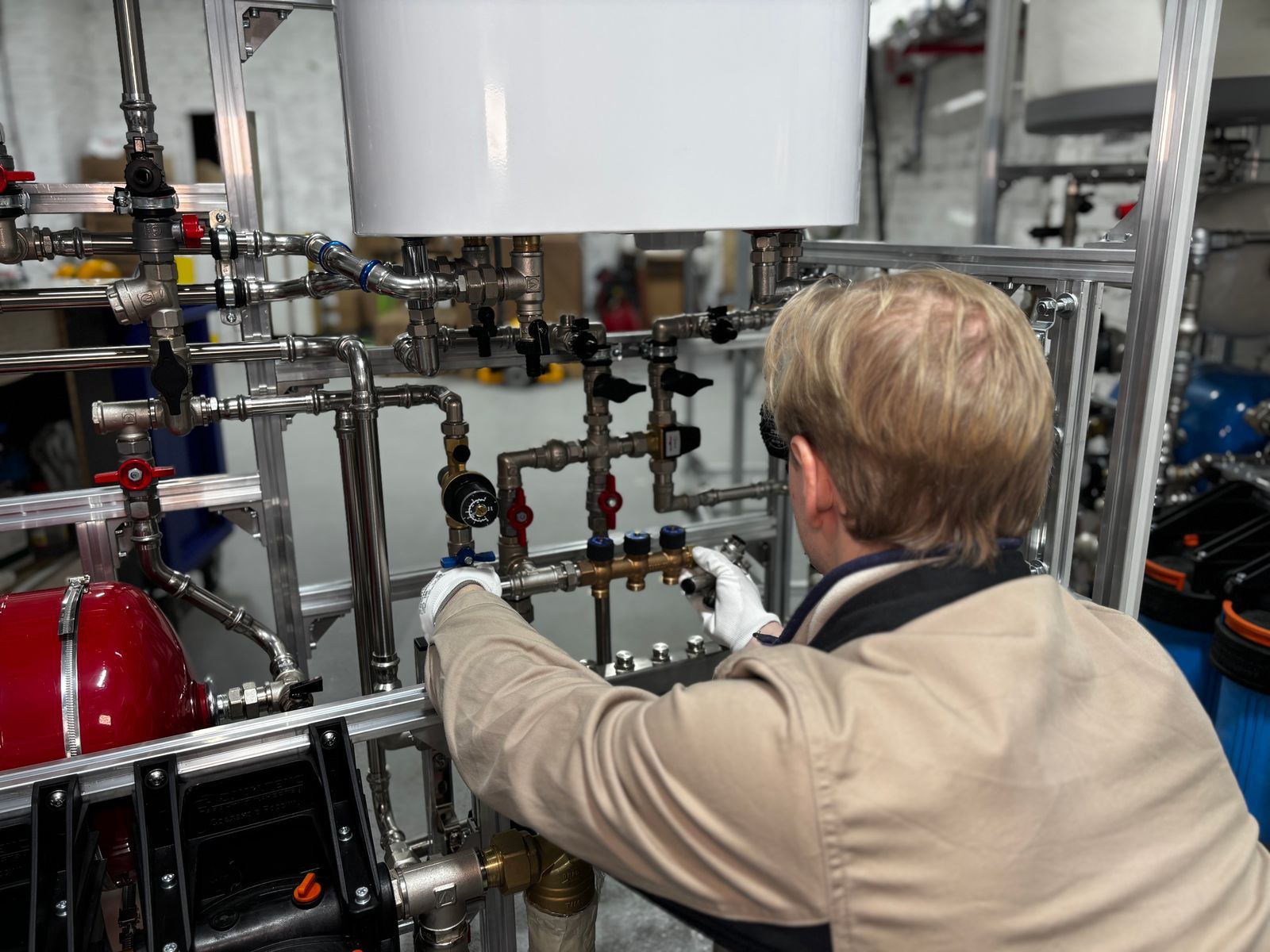
The work is hands-on and specific. We flush the tank until the water runs clean. We pull the anode rod to see how much protection remains and replace it when needed. We lift the T&P valve lever to confirm it opens, then watch it reseat without dripping. For gas equipment, we inspect the burner and flame, pilot or ignition parts, thermocouple or flame sensor, and the vent and draft. For electric equipment, we meter the elements and check the thermostats and wiring. Then we verify the expansion tank still holds its air charge, confirm a safe temperature setting near 120 degrees, and look over every fitting for early signs of a leak.
Tankless heaters skip the sediment bed but have a scale problem of their own. Minerals coat the heat exchanger over time, reducing efficiency and eventually setting off error codes. Our technicians connect a circulation pump to the isolation valves and run a descaling solution through the exchanger, clean the inlet screen, inspect the venting, and check the condensate drain on condensing models. You get a straightforward report after every visit, noting what is healthy and what needs attention. Call (925) 222-4903 to book maintenance for your Pleasanton water heater.
Our two most requested services are Water Heater Repair in Pleasanton and Water Heater Replacement in Pleasanton. That's the place to start for most homes.
When to Call for Water Heater Maintenance
A heater that is starting to struggle rarely hides it for long, and the clues are easy to spot once you know them. Keep an eye out for the following:
- Moisture, drips, or rust around the base or fittings
- A tankless unit showing error codes or fluctuating temperatures
- Noises from the water heater that were not there before
- A water heater that has never been flushed or inspected
- Rising utility bills that point to lost efficiency
- Rusty or discolored hot water at the tap
- Less hot water available than when the tank was new
- A rotten-egg smell from the hot water
A Slow Leak Never Stays Slow
Left alone, even minor symptoms like rumbling or temperatures that swing from hot to warm tend to mean the heater is working its way toward a breakdown. Don't wait. Get Pleasanton Water Heater on the phone at (925) 222-4903 and we'll get a technician scheduled.
Need Help With Water Heater Maintenance?
Call our team for pricing today.
Tap to Call (925) 222-4903Water Heater Maintenance FAQ
What a Trained Technician Brings to the Job
Not every maintenance task is a good DIY project. Keeping clutter away from the heater, checking for leaks, and noticing new noises are all useful. Flushing, anode replacement, relief valve testing, and burner or element work are a different matter. Hot water, seized fittings, brittle drain valves, and sediment that clogs the valve midway through can turn a simple job into a flooded floor. Relief valves on older heaters sometimes fail to close after testing. And gas-side checks involve flame quality and venting, which affect your household's air.
We come ready for the common surprises: a drain valve that will not reseal, an anode rod that has turned to wire, a relief valve that drips after testing. We carry replacements, along with meters for element and thermostat testing and a descaling kit for tankless units. More than parts, we bring experience. Small signs, like rust at a connection, a weak flame, or a waterlogged expansion tank, tell us where a heater is headed, and catching them early is the entire point of the visit. That is how a routine visit adds years to a heater's life.
From Your Call to Hot Water
Every visit follows a step-by-step method built around testing first and replacing parts only when the readings call for it. Here's exactly how a typical visit unfolds:
Safety Check First
The visit starts with safety: relief valve testing, a leak check, a look at combustion and venting on gas models, and element testing on electric ones.
Drain and Flush
For tankless units, this step becomes descaling: a solution is circulated through the heat exchanger to remove mineral buildup.
Anode and Expansion Tank Check
The anode rod is removed and measured, and the expansion tank is tested so pressure stays under control.
Final Adjustments
After refilling, we confirm the heater is running, set a safe temperature, and walk you through the condition of each part.
Want a Professional Opinion?
We give honest advice and upfront pricing on every job, big or small.
Call (925) 222-4903 NowHow to Prevent Water Heater Problems
A little routine care goes a long way toward keeping a water heater running well past its expected lifespan. Follow these tips from our technicians:
- Ask about the anode rod at each visit; it is the tank's main defense against rust
- Keep the thermostat near 120 degrees to limit scalding and slow sediment buildup
- Keep at least a couple of feet clear around the heater for air and service access
- Treat hard water to cut down on sediment and scale
- Look around the base of the heater periodically for moisture
- Make an annual flush part of your home maintenance routine
- Descale tankless units once a year, or more often in hard water
Should You DIY or Call a Pro?
A few tasks, like checking the temperature setting or lifting the relief valve lever to test it, are fine for homeowners, but most water heater work involves gas lines, venting, 240-volt circuits, or a tank full of scalding water, and that belongs with a professional. Here's a comparison:
| Factor | DIY Attempt | Professional Service |
|---|---|---|
| Flushing | Sediment clogs the valve midway | Tank cleared until water runs clean |
| Anode Rod | Condition rarely checked | Replacement matched to your tank |
| Relief Valve | No replacement on hand | Tested and replaced if it will not reseat |
| Burner and Venting | Carbon monoxide risk if venting is off | Weak parts caught early |
| Tankless Descaling | Error codes ignored | Error history reviewed |
| Expansion Tank | High water pressure unnoticed | Precharge measured and adjusted |
Talk to Our Water Heater Maintenance Team
The sooner you call, the sooner the hot water is back. Reach Pleasanton Water Heater for fast service.
Call (925) 222-4903 TodayWater Heater Maintenance Near Pleasanton
Wherever you are in the area, the same experienced team shows up with the same parts and the same pricing. Find your community below.